Ratifying the US Constitution (1787-1788)
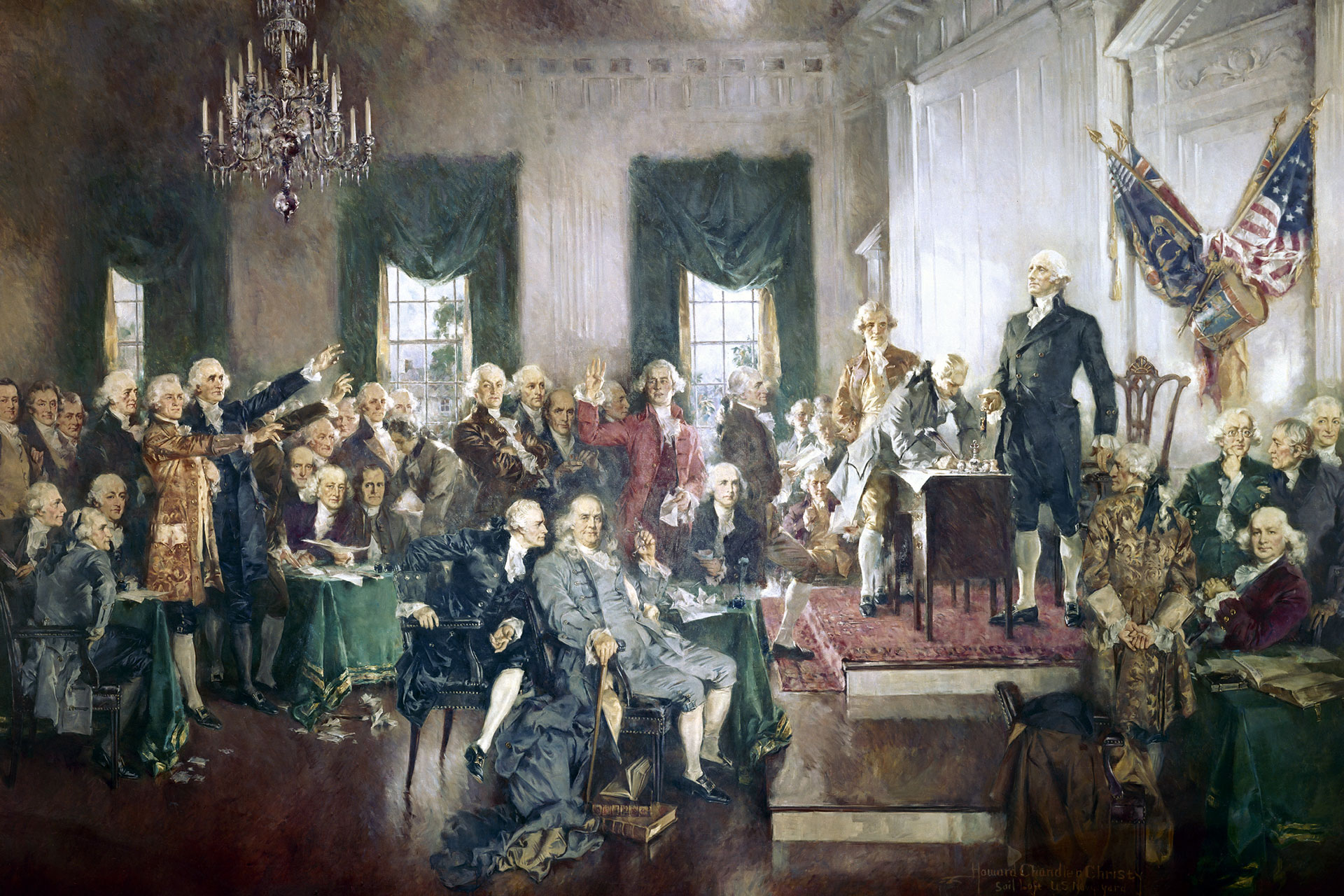
The organization of states formed by the Articles of Confederation soon found a successor in the United States Constitution. The longest-held national constitution in force in the world, this document created a separation of powers into three separate branches of government: the legislative, executive, and judicial branches. The lack of national coordination found in the Articles was lamented by Federalists, including Alexander Hamilton, John Jay, and James Madison, among others. The three wrote a collection of 85 essays between October 1787 and May 1788, originally called The Federalist, and known today as The Federalist Papers. The political theories expounded in these essays clashed with both the rationale behind the original Articles of Confederation and the ideas of Anti-Federalists, who opposed a robust central (“federal”) authority, such as Patrick Henry and George Mason.
The pro-federal government essays addressed concerns about the inefficiency of the existing federal government under the Articles of Confederation and argued for a new constitution that would establish this central authority. Alexander Hamilton, for example, wrote in Federalist 70, “energy in the executive is the leading character in the definition of good government.” The authors of the Federalist Papers explained how the new Constitution would address the weaknesses of the Articles of Confederation, such as the inability to provide for common defense or maintain public order, while also ensuring the preservation of individual liberties and state rights. While the idea of concentrating central authority wouldhave been denounced during the drafting of the Articles, Federalist proponents of the Constitution ultimately found victory in a law of the land that has sustained a people for most of their nation’s 250 years. To assuage the Anti-Federalists’ concerns of the dangers of too much centralized power in the federal government, the states also ratified the Bill of Rights, the first ten amendments to the Constitution, which enumerated individuals’ rights and states’ authority over any matters not explicitly stated in the Constitution.