The Boston Massacre (March 5, 1770)
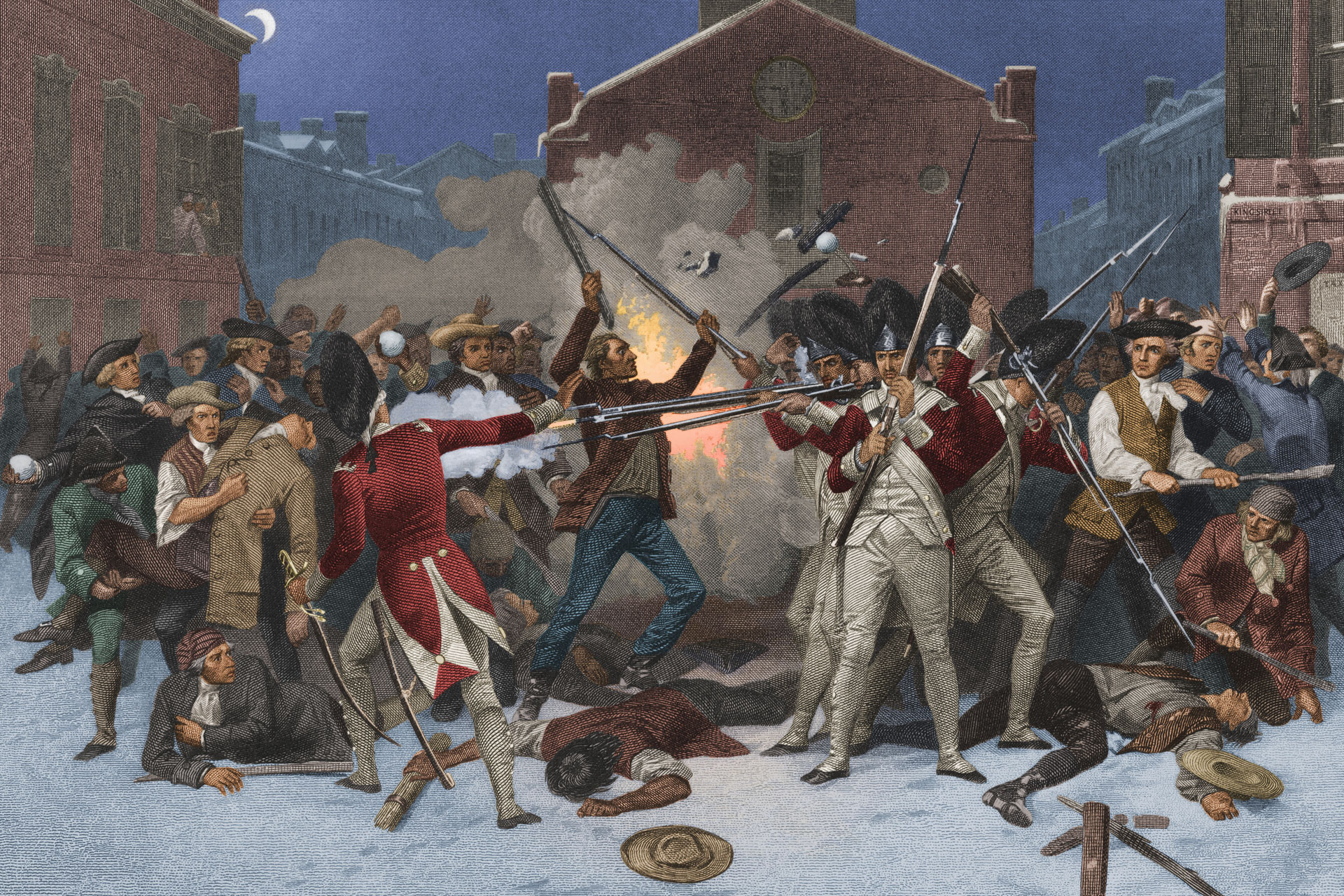
Tensions grew between Patriots and British soldiers in the years following the French and Indian War. In 1767, the British Parliament passed four acts known as the Townshend Acts, which included duties on lead, glass, paper, paint, and tea imported by the New World. Colonists in Boston, a major hub of commercial activity, urged boycotts of British products, and the Sons of Liberty, a group founded to protest the Stamp Act, identified shops that sold British products with the label "importer."
In October 1768, the 14th and 29th regiments of the British army arrived on colonial shores, leading to escalating tensions. On February 22, 1770, a colonist who doubled as a British informer shot and killed 11-year-old Christopher Seider, who was in the crowd of protestors. Just a couple of weeks after the slaying, on the morning of March 5, rumors grew of the British planning to cut down the Liberty Tree, where effigies of men who favored the Stamp Act were hung.
On that cold night, a tussle that began with taunting ended with the eventual deaths of five patriots at the hands of British soldiers. Among those first patriots to be shot and killed by British soldiers was Crispus Attucks, a sailor of mixed African and Native American descent. Paul Revere’s depiction of the event fanned the flames of discontent among patriotic colonists, who increasingly found themselves bearing the yoke of servitude.