Boston Tea Party (December 16, 1773)
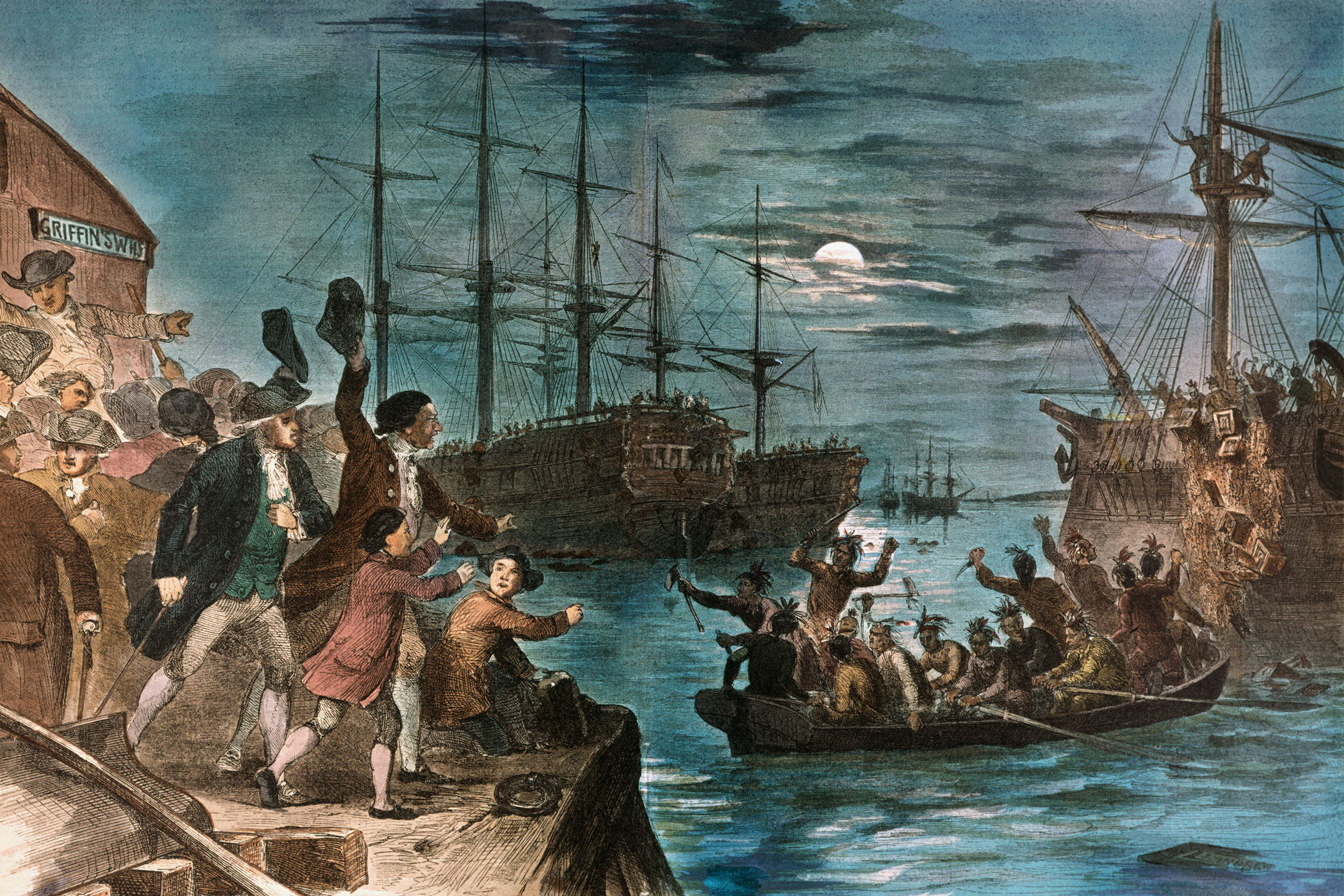
On May 10, 1773, the British Parliament passed the Tea Act effectuating Prime Minister Lord North’s wish to salvage the struggling East India Company and increase revenue for King George III’s government.
Through the Act, British Parliament permitted the Company to sell their tea directly to American colonists and bypass American merchants, while still maintaining the taxes imposed on the colonies by the Townsend Acts less than a decade before.
Though the British claimed the Tea Act had the potential to lower the price of tea in the colonies, the Sons of Liberty encouraged their fellow colonists to resist the new show of British force that threatened colonial merchants.
Moved by the rallying cry “No Taxation Without Representation,” American colonists disguised as Mohawk Indians boarded British ships and dumped 342 chests of tea, worth over $1.7 million in today’s dollars, into Boston Harbor on December 16, 1773. As the Crown exerted more control over the colonies, revolutionaries began to rise up to resist tyrannical rule by a distant king.